
Creating Safer Streets for Everyone
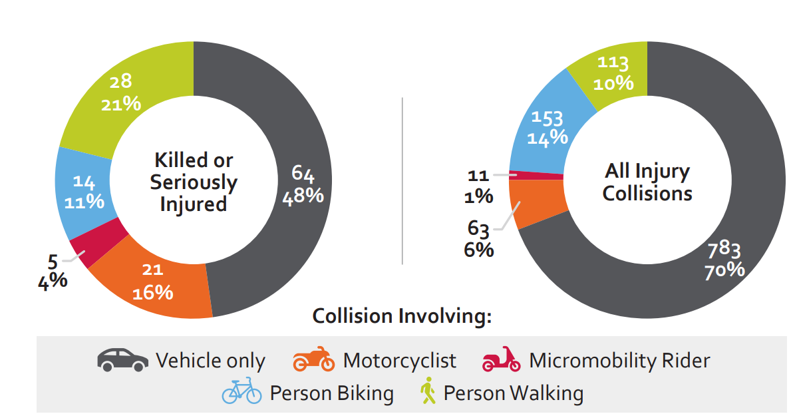
Every day, thousands of people move through Kelowna whether by walking, biking, rolling, driving, or taking transit. But between 2018 and 2022, more than 2,900 collisions occurred on City-owned roads, including 13 lives lost and nearly 120 people seriously injured. More than half of those severe collisions involved people walking, biking, or motorcycling, groups that face higher risk due to limited physical protection.
The Safe Mobility Action Plan outlines Kelowna’s strategy to work toward eliminating serious injuries and fatalities on our road network. The Plan applies the Safe System Approach, which focuses on managing speeds, improving road and intersection design, reducing conflict points, and addressing high‑risk behaviours. The goal is a transportation system that is more resilient to human error and better aligned with evidence‑based safety practices.
What the Plan is
The Safe Mobility Action Plan is a 10‑year strategy grounded in Vision Zero. This approach is based on the principle that fatal and serious injury collisions are preventable and that transportation systems should be designed to reduce both the likelihood and severity of crashes. The Plan applies the Safe System Approach, which focuses on six interconnected elements: safe speeds, safe road design, safe road users, safe vehicles, post‑crash care, and safe land use planning.
This Plan provides clear, practical actions to make Kelowna’s streets safer today while supporting long-term growth and livability. It aligns with:
Current State of Safe Mobility
- Vulnerable road users (people walking, biking, or motorcycling) were disproportionately impacted, making up over half of all fatal and serious injury collisions despite representing a smaller share of all injury collisions.
- Pedestrians were the most frequently killed or seriously injured among vulnerable road users. Motorcyclists were the next most affected.
- Younger drivers (aged 15–34) were involved in the most injury collisions; drivers aged 15-24 were over‑represented relative to their share of licensed drivers.
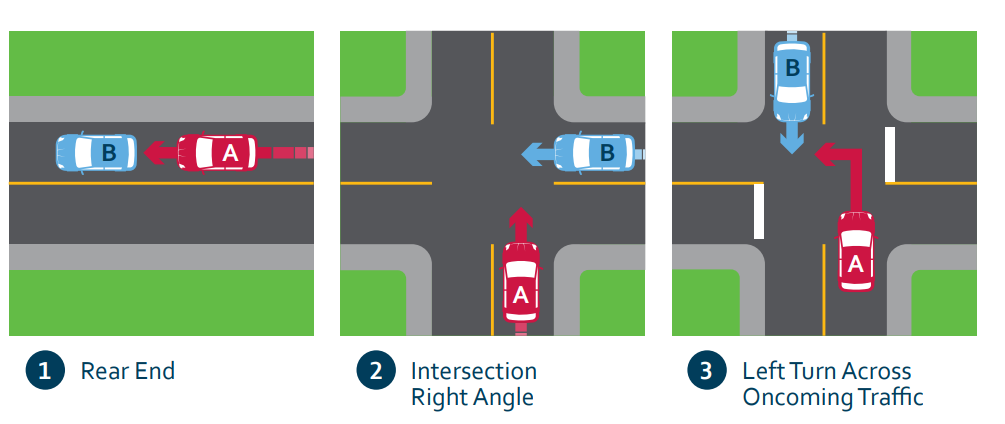
For multi‑vehicle injury collisions, the three most common types, accounting for ~70% of all injury collisions and nearly half of all collisions resulting in someone being killed or seriously injured, include:
- Rear‑end collisions
- Intersection right‑angle (T‑bone) collisions
- Left‑turn across oncoming traffic
- Driver inattention was the leading factor in collisions that resulted in someone being killed or seriously injured.
- Impairment (drugs or alcohol) was the second‑most common factor in collisions that caused death or serious injury.
- Reckless driving and failure to yield/obey traffic control were also significant contributors to severe outcomes.
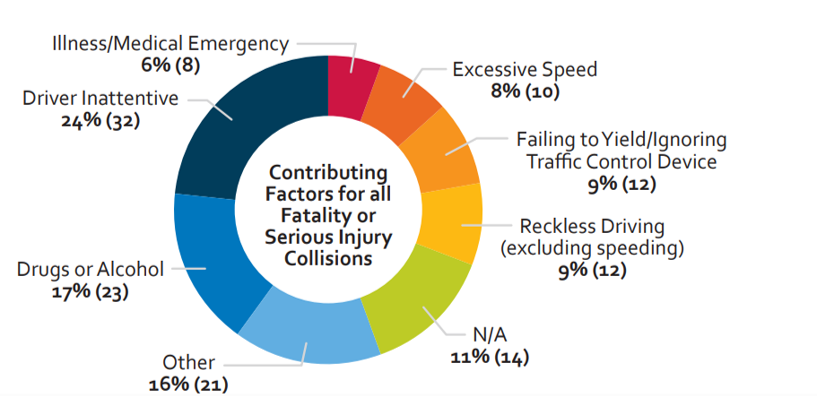
Excessive speed appeared in a notable share of fatal and serious injury collisions and acted as a key risk amplifier, even when it was not the primary cause.
- Network‑wide dispersion: 91% of collisions resulting in someone being killed or seriously injured occurred at unique locations (meaning these collisions did not repeat at the same spot during the study period).
- Jurisdictional Split: Most collisions that resulted in death or serious injury occurred on City‑owned roads, while 38% occurred on provincial highways (Highways 97 and 33).
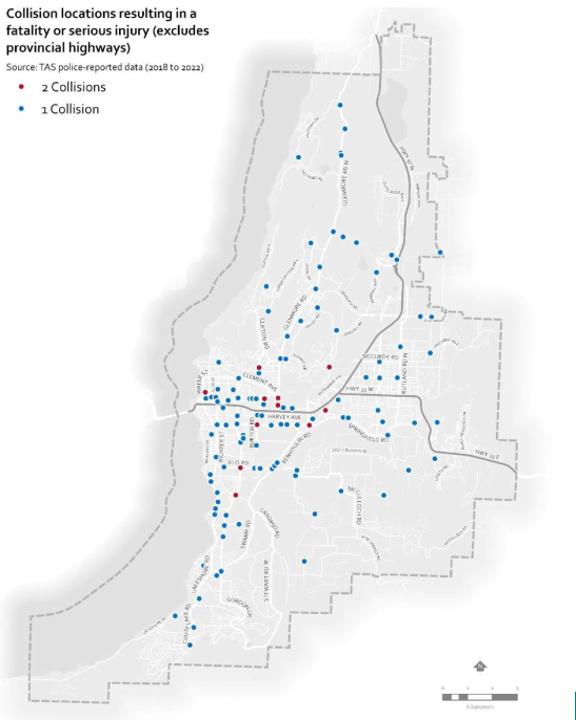
Collisions increased during periods of higher travel demand.
- More collisions happened between June and October, aligning with warmer weather, tourism, school return, and higher travel activity.
- Afternoon peak (3-6pm) saw the highest number of injury collisions due to heavier traffic volumes.
- Weekdays had more injury collisions, reflecting increased overall travel.
- Weekend collisions tended to be more severe, with a higher share resulting in death or serious injury.
Feedback from residents made it clear that traffic safety is a top concern.
How safe do people feel from collisions on Kelowna streets?
- 67% of survey respondents said they felt “not very safe” or “very unsafe” from collisions on Kelowna streets.
- People felt safest riding the bus; least safe biking or motorcycling.
Top concerns shared by the community members include:
- Intersection Design or Control
- Speeding
- Ignoring a traffic control device or failing to yield
Community engagement findings can be found here.
What the Plan Will Do
Intersections are where most conflicts occur, and several of Kelowna’s severe collisions involve left‑turn, right‑turn, or right‑angle movements. The Plan includes actions to improve intersection safety through:
- Left‑turn protections, including phases where only left‑turning vehicles are permitted to proceed
- Right‑turn safety improvements, including smart channels and right‑on‑red restrictions.
- Roundabouts at high‑risk intersections
- High Friction Surface Treatments on approaches with recurring rear‑end or wet‑weather collisions
- Access management to reduce conflict points at driveways and minor cross‑streets
- Advocacy to expand the provincial Intersection Safety Camera Program
More than half of Kelowna’s fatal and serious injury collisions involve people walking, cycling, or motorcycling. The Plan prioritizes improvements that reduce risk for vulnerable road users, including:
- Applying an equity lens when prioritizing safety investments
- Closing sidewalk gaps and improving crossings with features like Leading Pedestrian and Bicycle Intervals
- Continue to build out the All Ages & Abilities (AAA) bicycle network
- Enhancing school zone safety
- Prioritizing mode shift to transit
Speed is one of the strongest predictors of injury severity. The Plan outlines actions to support safe travel speeds through:
- Pilot area‑based speed limit reductions
- Advancing the Neighbourhood Traffic Calming Program
- Developing an Arterial Speed Management Program, including lane width adjustments, signal timing strategies, markings, and advocating to ICBC for expanded automated enforcement on high‑risk corridors
Achieving Vision Zero requires shared responsibility among the City, enforcement agencies, health partners, educators, and the community. Actions include:
- Delivering education and public‑awareness campaigns, including youth and young‑adult safety programs and initiatives that address distracted and impaired driving.
- Collaborating with the RCMP on targeted enforcement of speeding, aggressive driving and other high‑risk behaviours.
- Improving the quality and coordination of collision data through strengthened partnerships with ICBC, the RCMP, and Interior Health.
- Working with the Ministry of Transportation and Transit (MoTT) to advance safety improvements along Highways 97 and 33.